

In the world of premium manufacturing, the difference between a good product and a great one often lies in the details. For products like pharmaceutical softgels, high-end gummy supplements, and transparent food jellies, transparency is not just an aesthetic preference—it is a direct indicator of purity.
While many manufacturers focus solely on Bloom strength or viscosity, achieving crystal-clear clarity requires a deeper understanding of the raw material and the precision of the extraction process. At our facility in Henan, we have refined our production management to ensure that every batch of bovine gelatin meets the highest industry standards for light transmission.
This guide explores the technical levers—from raw material selection to chemical parameters—that control the transparency of bovine gelatin.
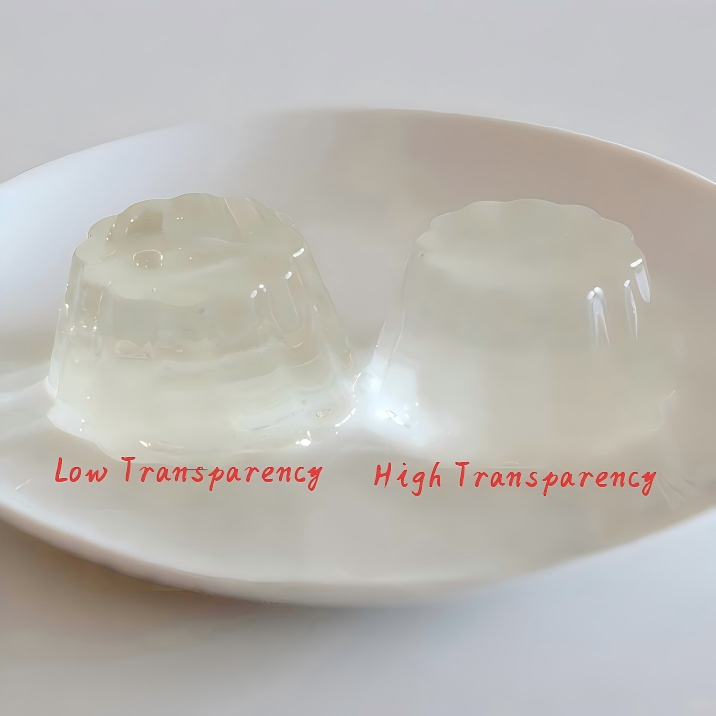
1. Raw Material Selection – The Foundation of Clarity
Transparency begins long before the gelatin enters the extraction tank. It starts with the hide.
Fresh vs. Dried Hides
The choice between fresh bovine hides and dried hides is the first critical decision. Using fresh bovine hides significantly reduces initial turbidity. Dried hides often suffer from oxidative degradation and microbial growth during storage, which introduces impurities that are difficult to remove later. Fresh hides preserve the native collagen structure, resulting in a solution with inherently lower turbidity.
The Advantage of Type B (Alkali) Process
Pre-treatment is where the magic happens. The Type B (alkali) process is superior for achieving high clarity. By using lime and other agents, this method effectively removes non-collagenous proteins and residual fats.
2. Key Production Processes for Maximum Clarity
Once the hides are prepped, the extraction and purification phases determine the final quality.
Multi-stage Filtration Systems
Filtration is not a single step; it is a barrier strategy.
- Diatomaceous Earth Filtration: This is the workhorse for removing fine particulates and color bodies.
- Activated Carbon Decolorization: Essential for adsorbing pigments and odors.
- Precision Cartridge Filtration: This is the “final interceptor.” Even if the bulk solution looks clear, microscopic particles can remain. Our precision filters catch these last impurities, ensuring the solution is optically clear.
Ion Exchange Technology
Beyond removing color, ion exchange is crucial for clarity. It targets inorganic salts (Ash content).
3. Chemical Parameters & Stability
Even with perfect filtration, chemical instability can ruin transparency.
pH Value Control
The isoelectric point of gelatin is a dangerous zone. If the pH drifts too close to the isoelectric point during extraction, protein aggregation occurs, causing immediate cloudiness. Strict pH buffering is required to keep the proteins in solution and the liquid clear.
Temperature Management
Heat is the enemy of clarity. Prolonged exposure to high temperatures during extraction accelerates hydrolysis. This creates degradation products (Maillard reaction precursors) that darken the solution and reduce transparency. Precise temperature control is non-negotiable.
Clarifying Agents
While we prioritize physical purification, the use of legal and compliant clarifying agents can provide the final polish, ensuring the gelatin meets strict regulatory and aesthetic standards.
4. Understanding Transparency in the COA
How do you verify transparency? Don’t just trust the supplier’s word; look at the Certificate of Analysis (COA).
Pro Tip: When comparing suppliers, do not just compare prices. Request transparency data comparison charts for different batches. Consistency in clarity is a sign of a stable manufacturing process.
5. Tailoring Clarity for Specific Applications
Different end-products have different clarity requirements:
Conclusion
Controlling the transparency of bovine gelatin is a systematic engineering. From the pastures of Henan to the final drying and cutting, every step counts. It is the result of selecting high-quality bovine hide gelatin sources, mastering multi-stage filtration, and rigorously controlling chemical parameters.
For manufacturers who refuse to compromise on quality:
Elevate your product’s clarity today.