

Effective hemorrhage control is a cornerstone of modern clinical medicine. Understanding the physiological pathways of hemostasis allows medical professionals to select the most appropriate hemostatic agents. Generally, these agents are classified based on the specific stage of the coagulation process they target.
Core Classifications of Hemostatic Agents
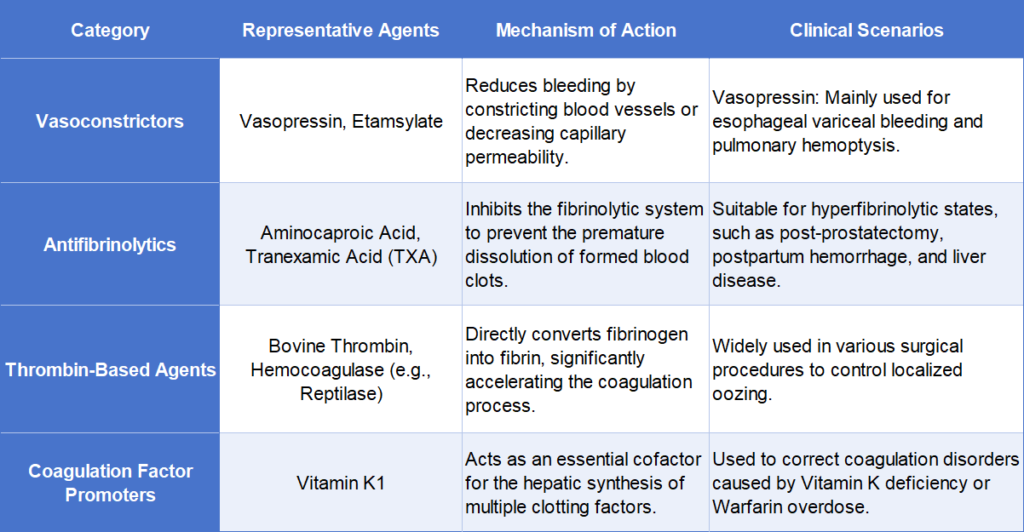
The following table summarizes the primary categories of systemic and local hemostatic drugs used in clinical practice:
Advanced and Specialized Agents
In addition to the core categories above, clinical medicine utilizes specialized treatments:
- Platelet Stimulators: Such as Recombinant Human Thrombopoietin (rhTPO).
- Capillary Hemostatics: Such as Carbazochrome Sodium Sulfonate.
- Traditional Medicine: Chinese herbal medicine offers categorized approaches (cooling, astringent, warming, or stasis-removing) based on syndrome differentiation.
Conclusion: The Art of Precision Hemostasis
Hemostasis is a precise medical art that requires a deep understanding of bleeding mechanisms and pharmacological properties. From traditional Vitamin K to bioengineered clotting factors and innovative local hemostatic materials, the field continues to evolve.
Gelatin remains a pivotal material in the production of high-performance local hemostats. Its biocompatibility and physical scaffold properties make it the ideal choice for surgical sponges and flowable matrices.
Want to learn more about how Gelatin is used in pharmaceutical hemostasis? [Click here to view our detailed guide on Gelatin Hemostatic Applications]