

The physical properties of gelatin can help us differentiate between different grades of gelatin, assess its quality, and ultimately help us choose the most suitable gelatin specifications for our needs. Common gelatin indicators include viscosity, gel strength (bloom strength), ash content, viscosity reduction, transparency, moisture content, isoelectric point, pH value, color, heavy metal content, and microbiological indicators. These indicators vary depending on the use of the gelatin (food, pharmaceutical, industrial) and its grade (e.g., Grade 1, Grade 2). The key is to ensure its physical performance, safety (low ash content, low heavy metal content, and absence of harmful microorganisms), and functionality.
This article will briefly introduce the meaning and measurement methods of each indicator.

1. Viscosity
The viscosity of gelatin refers to the internal friction force generated between molecules during the flow of its solution due to intermolecular interactions. This internal friction hinders the relative movement of the fluid, causing the gelatin solution to exhibit a certain resistance to flow when subjected to external forces. Higher viscosity indicates poorer fluidity of the gelatin solution and stronger intermolecular interactions. Viscosity directly affects the processing performance of gelatin in industrial applications (such as food, medicine, and photography) and the texture of the final product.
2. Gel Strength (Bloom Value)
The gel strength of gelatin, also known as Bloom value, refers to the hardness of the gel it forms. It is measured by the force required to press a probe of a specific diameter into the surface of the gelatin gel to a certain depth (usually 4 mm) under standard conditions, and the unit is Bloom g. This value represents the ability of the gelatin gel to resist deformation and directly affects the texture, stability, and quality of the product. A higher Bloom g value indicates stronger gelation ability and better quality of the gelatin.
3. Ash Content
The ash content of gelatin refers to the percentage by mass of inorganic substances (mainly inorganic salts and oxides) remaining after the complete combustion of gelatin at high temperatures (usually 550-600°C). This represents the content of inorganic impurities in gelatin, excluding protein (collagen hydrolysate) and water. These inorganic substances mainly originate from minerals in the raw materials (such as animal bones and hides), as well as impurities introduced during processing (such as acid and alkali treatment residues, metal ions, etc.).
Ash content is an important indicator for measuring the purity and quality of gelatin. Industrial and edible gelatin both have strict ash content standards.
4. Viscosity Reduction
Viscosity reduction of gelatin refers to the phenomenon of decreased viscosity of a gelatin solution under specific conditions (such as increased temperature, prolonged heating, inappropriate pH value, enzymatic degradation, etc.). This usually means that the gelatin molecular chains are degraded, the molecular weight decreases, or the structure is damaged, leading to increased fluidity and reduced viscosity of the solution. Viscosity is an important functional indicator of gelatin, and its reduction will affect its application performance in food, medicine, and other fields (such as gel strength and stability).
5. Transparency
The transparency of gelatin refers to the degree to which the solution or gel formed after dissolution allows light to pass through in the visible light range, usually appearing as a colorless or light yellow transparent state. It is one of the important indicators for measuring the purity and quality of gelatin, directly affecting its application in food, medicine, photography, cosmetics, and other fields.
Higher transparency indicates fewer impurities in the gelatin (such as insoluble particles, pigments, ash, etc.) and a more uniform molecular structure.
The transparency of gelatin is related to the purity of the raw materials (animal hides and bones) and the production process (especially decolorization and purification). For example, using ion exchange resins and flocculants can improve the transparency of the gelatin solution, making it more popular in the food and pharmaceutical industries.
6. Moisture Content
The moisture content of gelatin refers to the proportion of water contained in the gelatin. Moisture content is one of the basic indicators for evaluating the quality of gelatin because it directly affects the stability, shelf life, and application performance of gelatin. Excessive moisture content may lead to gelatin deterioration, such as microbial growth, adhesion, or accelerated oxidation, thus affecting its quality and safety.
7. Isoelectric Point
The isoelectric point of gelatin refers to the pH value at which the net charge of gelatin molecules in solution is zero. This characteristic is determined by the amphoteric groups of amino groups (positively charged) and carboxyl groups (negatively charged) that exist simultaneously in its molecular chain. At the isoelectric point, gelatin molecules stop electrophoretic migration, their viscosity and swelling reach the lowest values, while the gel strength reaches the highest value. In this case, gelatin is prone to aggregation or precipitation.
The isoelectric point of gelatin is usually between 4.8 and 9.0, depending on the extraction method: alkaline gelatin (Type B) has an isoelectric point around 4.8-5.0, while acid gelatin (Type A) has an isoelectric point in the range of 7.0-9.0. This characteristic determines the solubility, viscosity, and other properties of gelatin at different pH values, which is crucial for its applications.
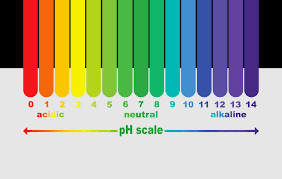
8. pH Value
The pH value of gelatin refers to the acidity or alkalinity of its aqueous solution, which is usually closely related to its production process, raw material type, and dissolution conditions.
9. Color
The color of gelatin is an important quality indicator that measures the depth of its appearance, directly affecting the sensory quality and application range of the product. High-quality gelatin is nearly transparent and colorless.
10. Heavy Metal Content
Heavy metal content refers to the proportion of heavy metals in gelatin, which is affected by raw materials and processing techniques. Regulations (such as the Chinese Pharmacopoeia) have strict limits for pharmaceutical-grade gelatin; for example, the total heavy metal content is usually required to be less than 30 ppm (parts per million), arsenic less than 1 ppm, and chromium less than 2 ppm. Industrial gelatin, however, may contain significantly higher levels of heavy metals, which are harmful to human health. The key is to use qualified food-grade or pharmaceutical-grade raw materials and standardized production processes to control the risks of heavy metals such as lead (Pb), chromium (Cr), and arsenic (As).
11. Microbiological Indicators
The microbiological indicators of gelatin mainly include the total bacterial count, coliforms, and limits for pathogenic bacteria (such as Salmonella, Staphylococcus aureus, and Shigella). This indicator is primarily for edible gelatin. Since industrial gelatin may contain high levels of microorganisms and heavy metals, its use in food and pharmaceuticals is strictly prohibited.
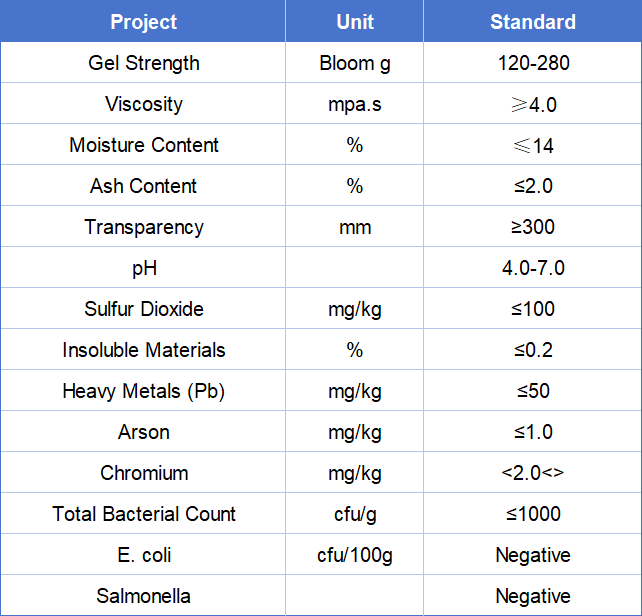
The above are the main quality indicators for gelatin. The following indicators, corresponding units, and standards are for your reference:
To learn more about gelatin, please click here: https://gelatinsupply.com/news/knowledgeofediblegelatin/.