

What is Halal Gelatin? Why Do Muslims Consume Halal Gelatin? In this article, I will provide you with an analysis.

In the modern food industry, gelatin is a common food additive widely found in numerous products such as gummy candies, puddings, yogurt, and pharmaceutical capsules. However, for many Muslim consumers, the permissibility of consuming gelatin is often a source of confusion and concern. This article aims to provide clear guidance for Muslim consumers. (If there are any misunderstandings, please feel free to leave a comment for discussion.)
What is Gelatin?
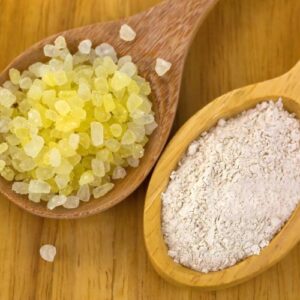
Gelatin is a protein substance extracted from animal connective tissues (such as skin, bones, and tendons). It is commonly used as a gelling agent, stabilizer, or thickener, providing specific texture and mouthfeel to food products. The production process of gelatin involves prolonged boiling and extraction of animal tissues.
Basic Principles of Islamic Dietary Laws
To understand why Muslims are so cautious about gelatin, it is essential first to grasp the basic principles of Islamic dietary laws:
(1) Halal: Refers to food that is permissible according to Islamic law.
(2) Haram: Refers to food that is explicitly prohibited.
(3) Tayyib : Not only permissible but also pure and of good quality.
The Quran explicitly prohibits Muslims from consuming the following animal sources:
– Pork and all its by-products
– Animals not slaughtered in the name of Allah
– Blood
– Carrion (dead meat)
– Predatory birds and animals, among others
Additionally, Islamic slaughtering regulations stipulate:
– The name of Allah must be invoked at the time of slaughter.
– A sharp knife must be used to swiftly cut the trachea, esophagus, and blood vessels.
– Ensuring the complete drainage of blood from the animal.
The Issue of Gelatin’s Halal Status
The controversy surrounding the halal status of gelatin primarily stems from its source and processing methods:
(1) Source Issues
– Porcine Gelatin: The most common type of gelatin, inexpensive and widely sourced. Since Islam explicitly prohibits the consumption of pork and all its derivatives, porcine gelatin is absolutely forbidden for Muslims. (Our company’s gelatin is primarily sourced from cattle and fish. For reference, please see this article.)
– Bovine Gelatin: Typically derived from cattle bones or hides. The key considerations here are:
– Was the animal slaughtered according to Islamic methods?
– Is the animal itself halal (e.g., not dead from illness, not used for idolatrous sacrifices, etc.)?
– Fish Gelatin: Extracted from fish skin, generally considered halal as fish are typically deemed permissible in Islamic law.
– Plant-Based Alternatives: Such as agar-agar, carrageenan, pectin, etc., which are safe for Muslims.
(2) Processing Issues
Even if the animal source is halal, if the gelatin production process involves contact with non-halal substances or uses alcohol for equipment cleaning, the final product may still be considered non-halal.
(3) Mixing and Cross-Contamination
In many food factories, the same production line may alternately process products containing porcine gelatin and bovine gelatin, leading to cross-contamination and rendering theoretically halal bovine gelatin questionable.
How to Identify Halal Gelatin?
For Muslim consumers, the following suggestions can help identify and use halal gelatin:
(1) Look for Certification Marks
Seek reliable halal certification marks. These certification bodies will:
– Verify the animal source
– Ensure slaughter complies with Islamic regulations
– Inspect the cleanliness of the production process
– Prevent cross-contamination
Common international halal certification bodies include:
– Islamic Food and Nutrition Council of America (IFANCA) – Certification mark: ✔
– Islamic Services of America (ISA)
– Local halal certification bodies in various countries
(2) Read Ingredient Labels
– Look for direct labeling such as “Halal Gelatin.”
– Check for specified sources: “Bovine Gelatin” accompanied by halal certification.
– Plant-based gelatin (e.g., agar-agar, carrageenan) usually requires no concern.
(3) Be Cautious of Vague Descriptions
– “Animal Gelatin” – Source unspecified, should be avoided.
– “Gelatin” without source specification – Exercise caution, as it is most commonly non-halal porcine gelatin.
(4) Special Product Considerations
– Pharmaceutical Capsules: Many capsules use gelatin; Muslims can opt for plant-based capsules or seek halal-certified medicines.
– Desserts and Candies: Gummies, marshmallows, puddings, etc., often contain gelatin and require special attention.
– Dairy Products: Some yogurts and cheeses may use gelatin as a stabilizer.
Alternatives to Halal Gelatin
With growing market demand, there are now many halal alternatives:
(1) Plant-Based Gelling Agents :
– Agar-Agar (extracted from seaweed)
– Carrageenan (extracted from red seaweed)
– Pectin (extracted from fruits)
– Guar Gum, Xanthan Gum, etc.
(2) Halal-Certified Animal Gelatin :
– Sourced from cattle, sheep, etc., slaughtered according to Islamic methods.
– Fish gelatin.
(3) Halal-Certified Synthetic Alternatives :
Some alternatives have been developed through modern food technology.
Practical Advice for Muslim Consumers
- Learn more aboutIslamic dietary regulations: Learn the basic principles of Islamic dietary laws and common food additives.
- Prioritize Certified Products: Especially when the source is unclear, certification is the most reliable assurance.
- Inquire and Verify: When dining out or purchasing unpackaged food, actively ask about the source of gelatin.
- Support the Halal Industry: By purchasing halal-certified products, you support industries that align with Islamic values.
- Be Flexible and Practical: When uncertain, opt for conservative alternatives, such as plant-based products.
The fundamental reason Muslims cannot consume most commercially available gelatin is that it typically comes from animals not slaughtered according to Islamic methods, particularly pigs. This prohibition reflects Islam’s emphasis on dietary purity and sanctity, as well as adherence to the commandments of Allah.
With the expansion of the halal food market and the improvement of certification systems, Muslim consumers now have safer choices. By understanding the sources of gelatin, seeking reliable halal certifications, and choosing appropriate alternatives, Muslims can fully enjoy the conveniences of the modern food industry while adhering to religious guidelines.
Most importantly, these dietary regulations are not only about physical purity but also an integral part of a Muslim’s spiritual life, reflecting obedience to the Creator’s commandments and the pursuit of physical and spiritual purity. In an increasingly globalized food supply chain, maintaining this awareness and making informed choices is a crucial way for modern Muslims to practice their faith.