

In the field of gelatin production, a set of efficient and well-suited equipment is crucial for ensuring product quality and production efficiency. Gelatin, as a key raw material widely used in numerous industries such as food, pharmaceuticals, and photography, requires extremely stringent equipment standards throughout its production process. From raw material pretreatment to final product output, every stage requires specific equipment for precise coordination. This article will briefly introduce the main equipment involved in the gelatin production process, providing you with a comprehensive and clear understanding of gelatin production equipment.
The main equipment involved in the gelatin production process includes gelatin extraction kettles, filters, concentration units, reverse osmosis pure water systems, long-net drying units, grinders, and mixers.
- Gelatin Extraction Pot
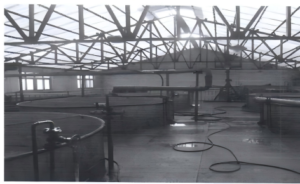
Process description:
At a temperature of 50℃-80℃, each gelatin extraction takes 4-6 hours, with a neutral pH value ranging from 6.5 to 7.5. Fill the kettle with water 5-10cm above the skin material and keep the skin material fully immersed in water. Begin to drain the gelatin when the concentration of the gelatin solution at the bottom reaches 6%.
- Filter Cotton
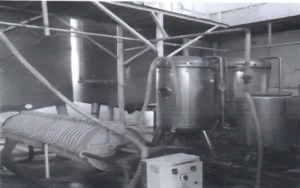
Process description:
Use a filter cotton in the filter to remove impurities, and ensure that the transparency of the filtered gelatin solution is controlled at ≥400mm.
- Concentration Units
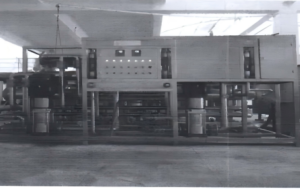
Process description:
Ensure that the gelatin solution temperature is below 45℃ before starting the machine. Check that the inlet gelatin solution valve is opened 1/2, the outlet gelatin solution valve is fully opened, and the water drain valve is also fully opened before starting the machine. After starting the machine for 1 minute, open the inlet gelatin solution valve and adjust the outlet gelatin solution valve to a pressure of 0.1-0.15Mpa/cm². The working cycle begins. Once the concentration is complete, stop the machine and allow all the gelatin solution inside the membrane to flow into the circulating tank for cleaning.
- Reverse Osmosis Pure Water System
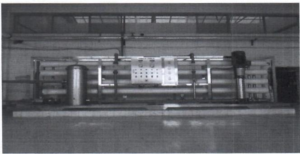
Process Description:
After cleaning the membrane equipment, first turn on the raw water feed pump, then the primary circulation pump, followed by the secondary high-pressure pump, and finally the tertiary circulation pump.
Perform an alkaline cleaning once per shift. Additionally, steam sterilization of pipelines and tanks should be conducted every 10 hours.
- Long-net Drying Unit
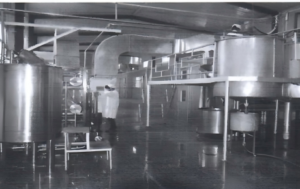 Process Description:The key to operation is temperature control. The temperature in the first chamber should be controlled at ≤35℃, the second at ≤40℃, the third at ≤45℃, the fourth at ≤50℃, the fifth at ≤55℃, the sixth at ≤60℃, and in the seventh chamber where high-temperature drying takes place, ultraviolet light exposure should be limited to ≤1 hour (using 30W UV lamps for every 10-15 square meters, with a height of ≤2 meters).
 - Crusher
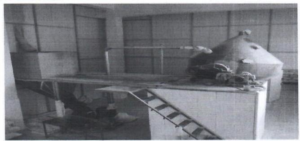 Process Description:After drying in the long-net drying unit, the gelatin particles are crushed using a standard crusher with an aperture of 8mm.
 - Mixer
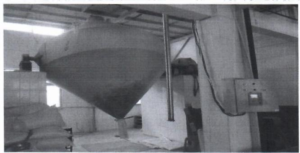 Process Description:The mixer is used to blend products of different quality specifications as required by the purchaser’s contract. On-site personnel are required to maintain cleanliness and hygiene during the mixing process.
 - 20-40 Mesh Crusher
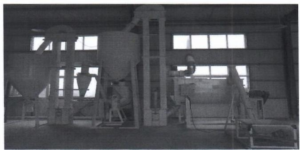 Process Description:In response to specific requirements from some purchasers regarding the mesh size of gelatin, our company has established a dedicated crushing workshop. This workshop specializes in crushing the standard 8-mesh gelatin particles into a finer 20-40 mesh size.